
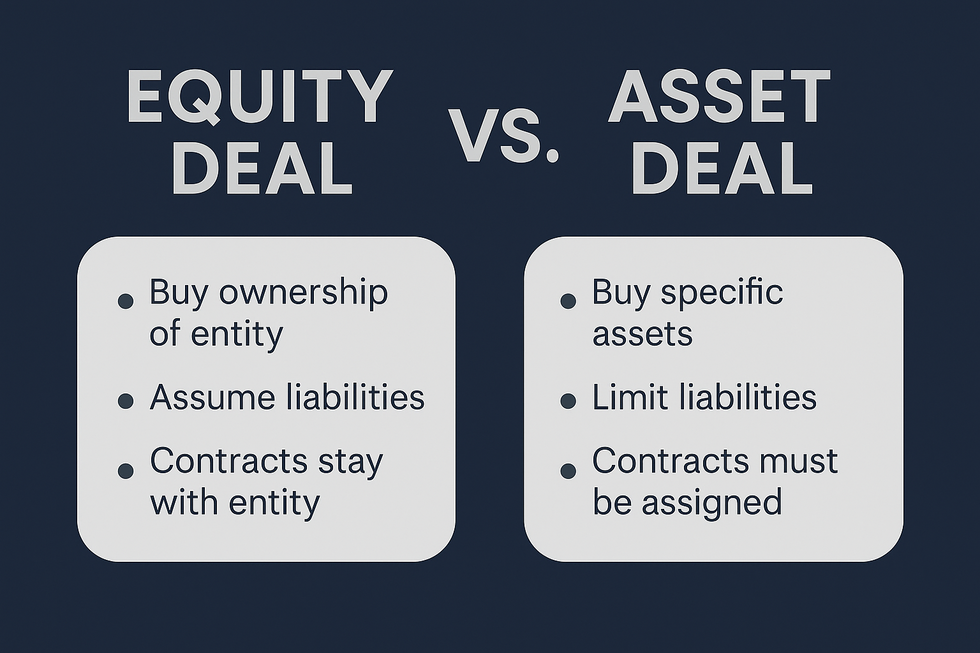
Equity Deal vs. Asset Deal: Choosing the Right Path When Buying or Selling a Small Business
When it comes to buying or selling a small business, one of the first - and most important - questions to answer is: Will this transaction be structured as an equity deal or an asset deal? While both paths can achieve the same overall goal (transferring ownership of the business), the structure you choose can have major consequences for liability, taxes, and even the ongoing relationship between buyer and seller.
I frequently help business owners evaluate the tradeoffs of each structure and choose the best fit for their goals. Here's a breakdown of the key differences.
What Is an Equity Deal?
In an equity deal, a buyer purchases the ownership interests in the company (stock in a corporation, membership interests in an LLC, or partnership interests). The entity itself doesn't change - only the owners do.
Key Characteristics of Equity Deals:
· The business remains intact as a legal entity.
· Contracts, leases, licenses, and permits usually remain with the company.
· Employees remain employed by the same entity, which can make transitions smoother.
· Liabilities—both known and unknown—typically stay with the company, meaning buyers assume a higher degree of risk.
Best for:
- Transactions where continuity of contracts, permits, and operations is crucial; or,
- The business has valuable goodwill tied directly to the entity - in other words, the name and reputation of the business is valuable.
What Is an Asset Deal?
In an asset deal, the buyer purchases specific assets of the business (such as equipment, inventory, customer lists, and goodwill), rather than ownership in the entity itself. The selling company remains in existence unless dissolved, and it retains liabilities unless expressly assumed by the buyer.
Key Characteristics of Asset Deals:
· Buyers can “cherry pick” which assets and liabilities they want to acquire.
· Generally considered less risky for buyers, since unwanted liabilities remain with the seller.
· Contracts, permits, and licenses often need to be assigned or transferred, which can require third-party consent.
· Employees typically need to be rehired by the buyer's entity.
Best for:
- Buyers seeking to minimize liability exposure; or,
- Buyers that want to purchase only certain parts of a business.
Tax Considerations
The tax consequences of equity vs. asset deals can be significant:
- Asset deals often favor buyers, who may benefit from a stepped-up basis in the acquired assets (leading to larger depreciation or amortization deductions). Sellers, however, may face higher taxes if appreciated assets are sold.
- Equity deals are generally more favorable for sellers, particularly if the sale qualifies for long-term capital gains treatment. Buyers may lose out on certain tax benefits but avoid the complexity of re-assigning assets and contracts.
Because taxes play such a critical role, both parties should consult with legal and tax advisors early in the process.
Choosing the Right Structure
The “right” structure depends on factors such as:
- The nature of the business and its assets.
- The buyer's tolerance for risk.
- The importance of continuity in contracts, licenses, and employees.
- The relative tax implications for each side.
In many deals, negotiations balance the competing interests: buyers prefer asset deals for liability and tax benefits, while sellers prefer equity deals for simplicity and tax efficiency. Creative structuring and careful drafting can bridge the gap.
Final Thoughts
Whether you're buying or selling a small business, the decision between an equity deal and an asset deal is not one-size-fits-all. Each path carries its own risks and rewards, and the wrong choice can have lasting consequences.
I guide business owners through every stage of the transaction—helping you understand your options, mitigate risks, and structure the deal that best serves your goals.
Thinking about buying or selling a business? Visit www.eldredgelawgroup.com to schedule a consultation.

Comments
There are no comments for this post. Be the first and Add your Comment below.
Leave a Comment